Wholesale Beverage Dispensers: MOQ, OEM Branding and Container Loading for Importers
- Share
- publisher
- Ethan Li
- Issue Time
- Nov 10,2026
Summary
An importer's sourcing guide to buying beverage dispensers wholesale: MOQ and price breaks, OEM branding and private label, carton sizes, container loading and lead times — the five numbers that decide landed cost.
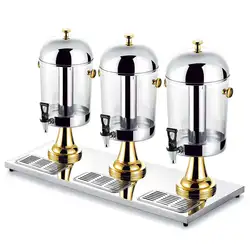
Wholesale beverage dispensers are priced by five numbers, not one: the MOQ (typically 50–500 units for a first container order), the FOB price tier (unit cost drops roughly 10–25% from trial order to full container), the carton size and gross weight, the container loading (a 40HQ holds roughly 1,200–1,800 units depending on model), and the mass-production lead time (25–35 days). These five numbers decide your landed cost and margin long before the headline unit price does.

Wholesale Beverage Dispensers: Five Numbers to Confirm Before You Negotiate
Wholesale beverage dispensers procurement runs on five confirmable numbers, and importers who fix these before negotiating consistently land better terms than those who negotiate price first. The five are the MOQ, the FOB price tier, the carton size and gross weight, the container loading per 20ft or 40HQ, and the mass-production lead time. Confirm each one in writing before you sign anything, because every downstream cost — freight, duty, warehousing, cash flow — is a function of these five.
| Number | What it is | Typical range | Why it matters |
|---|---|---|---|
| MOQ | Minimum order quantity | 50–500 units (first container) | Sets your cash outlay and warehousing |
| FOB price tier | Unit cost by order volume | 10–25% lower at full container | Directly sets your margin |
| Carton size & gross weight | Per-unit freight driver | ~0.03–0.07 CBM, 4–7 kg | Decides your freight bill |
| Container loading | Units per 20ft / 40HQ | 40HQ ~1,200–1,800 units | Sets your per-unit freight |
| Lead time | Sample to bulk delivery | 25–35 days production | Sets your stock and peak planning |
Ranges are industry-typical values and vary by model, material and supplier — confirm each against your quotation before ordering.
Beverage Dispenser Types and the Wholesale Price Bands Behind Them
Beverage dispensers for hotels — the category importers also search as buffet dispensers or juice dispensers — split into three capacity classes: 8L single-head, 16L double-head and 24L double or triple-head, across three body materials: stainless steel, acrylic and PET. The wholesale price band follows structure more than capacity: the valve body, the cylinder material and whether the unit is refrigerated are the three biggest cost drivers. A stainless 16L double-head therefore sits well above a single-head PET unit of the same capacity, because the spigot and the tank, not the litre count, set the build cost.
| Type | Capacity | Common materials | Typical channel | Price-band driver |
|---|---|---|---|---|
| Single-head | 8L | Stainless steel, PET | Event hire, small cafés | Lowest band — simple spigot |
| Double-head | 16L | Stainless steel, acrylic | Hotels, restaurants | Mid band — twin valve body |
| Double / triple-head | 24L | Stainless steel | Banquet, high-volume catering | Higher band — chilled option |
If you need the selection framework — which type fits a breakfast line versus a bar service — the earlier commercial juice dispenser buying guide covers features and best options in depth. This guide stays on the transaction side: how the model you pick flows into MOQ, freight and margin.

MOQ and Price Breaks for Wholesale Beverage Dispensers
Wholesale beverage dispensers price breaks follow a three-tier ladder: a trial order (a small mixed run, often 50–200 units), a pallet order (one or more full pallets of a single series), and a full container order, which carries the lowest unit cost. The unit cost drop between trial and full container is typically 10–25%, driven by amortised tooling, material purchasing and changeover time rather than any mark-up discount. For importers building a juice dispenser wholesale line for retail, the container tier is where the margin actually lives.
For orders that include bespoke sizes or finishes, the custom drink and food dispensers group page lists the configurations available on a made-to-order basis, and the same price-tier logic applies once the tooling is amortised into a container run.
Can I Mix Models in One Wholesale Order?
Yes — models within the same series can usually be mixed in one wholesale order, normally starting at a full pallet per model. Mixing adds a small cost at inspection and packing because each model needs its own carton and label, so the more models you mix, the closer your effective unit cost moves toward the pallet tier rather than the container tier. Keep a first order to 2–3 models. Adjacent categories such as cereal and dry food dispensers ship on the same station concept but belong in a separate packing run.
What Is a Realistic MOQ for Custom-Branded Dispensers?
A realistic MOQ for custom-branded beverage dispensers depends on the branding depth: a logo change (silk-screen or laser) usually needs a few hundred units, while a colour, capacity or valve-structure change raises the minimum because it triggers new tooling. A sample and tooling fee typically applies on custom work, with the fee credited back against the bulk order once the volume threshold is met — confirm the exact threshold and credit policy with the supplier, as these vary.
OEM and Private Label: From Logo to Retail-Ready Packaging
OEM beverage dispensers scale across five levels: a logo (silk-screen or laser on the body), a colour change, a capacity change, a valve and structure change, and finally retail-ready packaging — colour box, manual and barcode printed to your brand. A drink dispenser OEM project follows this same ladder, and private label drink dispensers add a documentation layer on top, because the packaging is the first thing a customs officer or a retail buyer reads.
- Private-label document set: trademark authorisation, barcode registration, packaging copy in the target language, and any market-specific compliance markings.
- Where to start on manufacturing: the OEM/ODM manufacturing services page details how a custom dispenser moves from drawing to tooling.
- Where to start on branding: the start your private label project page walks through the labelling and packaging steps.

Container Loading: 20ft vs 40HQ for Beverage Dispensers
Beverage dispenser container loading is a volume calculation, not a weight one: a dispenser carton occupies roughly 0.03–0.07 CBM and weighs 4–7 kg, so a 20ft container (about 28 CBM usable) and a 40HQ (about 68 CBM usable) are filled by carton count long before they hit a weight limit. Plan the loading at 85% efficiency rather than 100%, because acrylic bowls need dividers and corner protection that eat into usable volume.
| Model | Approx. carton (cm) | Approx. CBM | Units per 20ft | Units per 40HQ |
|---|---|---|---|---|
| 8L single-head | 30 × 28 × 40 | ~0.034 | ~700 | ~1,700 |
| 16L double-head | 35 × 32 × 45 | ~0.050 | ~560 | ~1,360 |
| 24L double / triple-head | 38 × 35 × 50 | ~0.067 | ~420 | ~1,020 |
Quantities are estimates at 85% loading efficiency and will shift with carton revision, pallet height and stacking limits — request a per-model carton list from the supplier and re-run the numbers on your own sheet.
Two loading notes that catch first-time importers. First, volumetric weight can exceed actual weight on the freight quote when cartons are light but bulky, so ask the forwarder for the chargeable-weight basis, not the gross weight. Second, stacking limits on acrylic-tank units cap how many cartons ride on top of each other, which lowers the pallet count below the raw CBM figure — the 85% efficiency above already absorbs part of that.
Packaging, Spare Taps and After-Sales Kits
Beverage dispenser spare parts should be specified in the order, not assumed: a standard kit covers the taps, sealing rings, outlet valves and bases, and a sensible ratio is 2–3% of the order quantity staged as loose spare parts for after-sales. Without a written spare ratio on the proforma invoice, the parts simply do not ship, and the first broken tap in your market becomes a customer-service problem instead of a five-minute swap.
- Unit packing: a colour box per dispenser, then a five-layer corrugated outer carton with corner protection.
- Sea-freight protection: a moisture barrier or sealed polybag for the metal parts, since long sea voyages rust unprotected stainless and steel fittings.
- After-sales kit: order the 2–3% spare-tap ratio as a separate line item so it stays clearly separated from the retail units.
Certifications and Documents Importers Ask For
Beverage dispenser certification is a document request, not a product feature: importers buying beverage dispensers for hotels typically ask the supplier for food-contact material compliance (such as FDA, LFGB or the EU 10/2011 framework), a REACH declaration where the market requires it, and the material and packing list and commercial invoice for clearance. Ask for the test reports for the exact model and material you are buying, and treat any certificate that does not name your model as unverified.
The certificate set lives inside a wider sourcing process — the professional buffet supplies sourcing guide covers the document and inspection flow end to end, and the earlier how to evaluate a buffet equipment supplier checklist tells you what to verify before you place the order at all.

Lead Times From Sample to Bulk Delivery
A beverage dispenser lead time runs in five stages: drawing and sample (7–15 days), confirmation (about 3 days), mass production (25–35 days), pre-shipment inspection (about 2 days) and sea freight (20–35 days) depending on destination. Added together, a first container order realistically lands 60–90 days after you approve the sample — which is why the peak-season rule below matters more than any single stage number.
| Stage | Typical duration | What it depends on |
|---|---|---|
| Drawing & sample | 7–15 days | Custom vs stock model |
| Confirmation | ~3 days | Approval turnaround |
| Mass production | 25–35 days | Order volume, peak season |
| Pre-shipment inspection | ~2 days | Inspection booking |
| Sea freight | 20–35 days | Destination port |
Peak-season rule: lock production capacity about 90 days before a major selling season, because dispenser lines fill fast ahead of hotel pre-openings and Ramadan and holiday catering demand in the markets PYEIN® serves. Ordering inside 60 days forces you toward whatever stock is left, not the model you planned.
Wholesale Beverage Dispensers FAQ
Which beverage dispenser sizes sell best in the Middle East?
In the Middle East hotel channel, 16L and 24L double-head dispensers sell best, while event and rental operators favour 8L lightweight units. Hotel breakfast lines run 16L double-head units for juice and water; large banquet buffets step up to 24L. See PYEIN®'s Middle East market solution page for the regional line-up and specifications.
What is the typical lead time for 500 beverage dispensers?
A typical order of 500 beverage dispensers ships in 25–35 days of mass production, plus 5–7 days more if custom packaging is required. Add sample approval (7–15 days) and sea freight (20–35 days depending on destination) for the full door-to-door timeline, which lands at roughly 60–90 days total.
Do wholesale dispensers ship with spare taps and gaskets?
Yes — wholesale beverage dispensers can ship with a 2–3% spare-parts kit covering taps, sealing rings and outlet valves, provided the spare ratio is written into the proforma invoice at order time. A spare kit is not automatic, so confirm the parts list and ratio before signing the PI.
How do I protect acrylic bowls during shipping?
Protect acrylic bowls with layered dividers, corner protection and an individual colour box per unit, and budget an 85% container loading efficiency rather than a full 100% to allow for the padding. Acrylic scratches and cracks under point pressure, so the packing must stop the bowls from touching each other or the carton walls.
Request a Wholesale Beverage Dispenser Quotation
A wholesale beverage dispensers quotation is only as accurate as the brief you send. Six pieces of information let a supplier price you correctly on the first pass, instead of trading three rounds of questions:
- Model and capacity (for example, 16L double-head stainless steel).
- Order quantity, and whether the order mixes models.
- Logo or branding method (silk-screen, laser, or full private label).
- Target market, so certifications and voltage are matched.
- Packaging language for the colour box and manual.
- Delivery port, to quote FOB or CFR correctly.
PYEIN® manufactures wholesale beverage dispensers and complete buffet solutions for hotel and catering importers, with OEM/ODM support from sample to container load. Revisit the wholesale beverage dispensers range, then request an OEM/ODM quotation with your brief.