Chafing Dish Sizes & Dimensions: Full Size vs 4 Quart Guide
- Share
- Issue Time
- Oct 8,2026
Summary
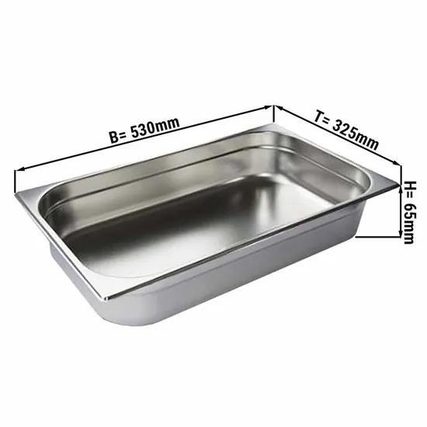
A full size chafing dish takes a 1/1 food pan - roughly 9.5-11 litres in the standard 530 x 325 mm Gastronorm footprint - while a 4 quart unit holds about 3.8 litres. This guide compares chafing dish sizes, pan formats, dimensions and usable capacity, and gives a sizing checklist plus a bulk order checklist covering material, certification, packaging and loading.
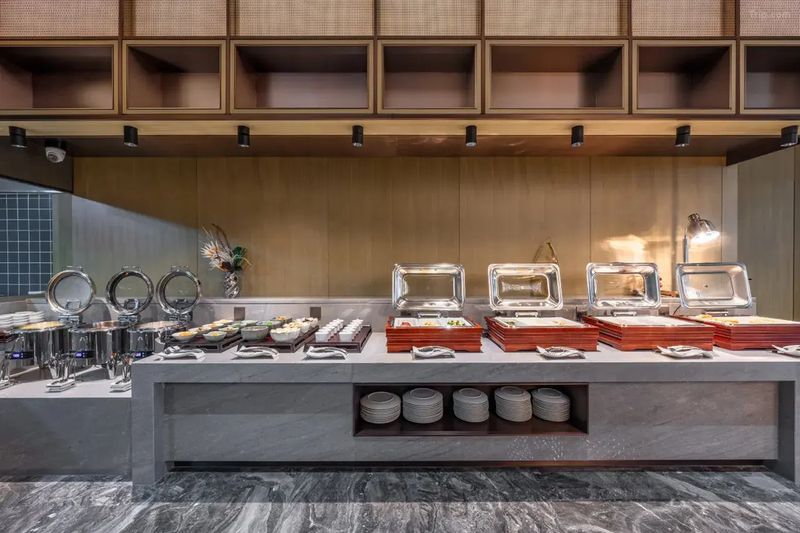
Choosing the right chafing dish size is not about picking the largest food pan available. Pan format and pan depth decide food capacity, replenishment frequency, counter space, carton volume and freight cost — and for hotels, caterers and event operators, those factors decide the real cost of a buffet line. Comparing chafing dish sizes before you commit is therefore a purchasing decision, not a cosmetic one.
Direct answer: the most common full size chafing dish takes a 1/1-size food pan, which in the standard 530 × 325 mm Gastronorm footprint holds roughly 9.5–11 litres at a 65 mm pan depth. A 4 quart chafing dish holds about 3.8 litres. Smaller 1/2 and 1/3 pans suit compact buffet stations and lower-volume dishes. Bulk buyers should size the pan against peak servings, replenishment frequency and buffet space — not capacity alone.
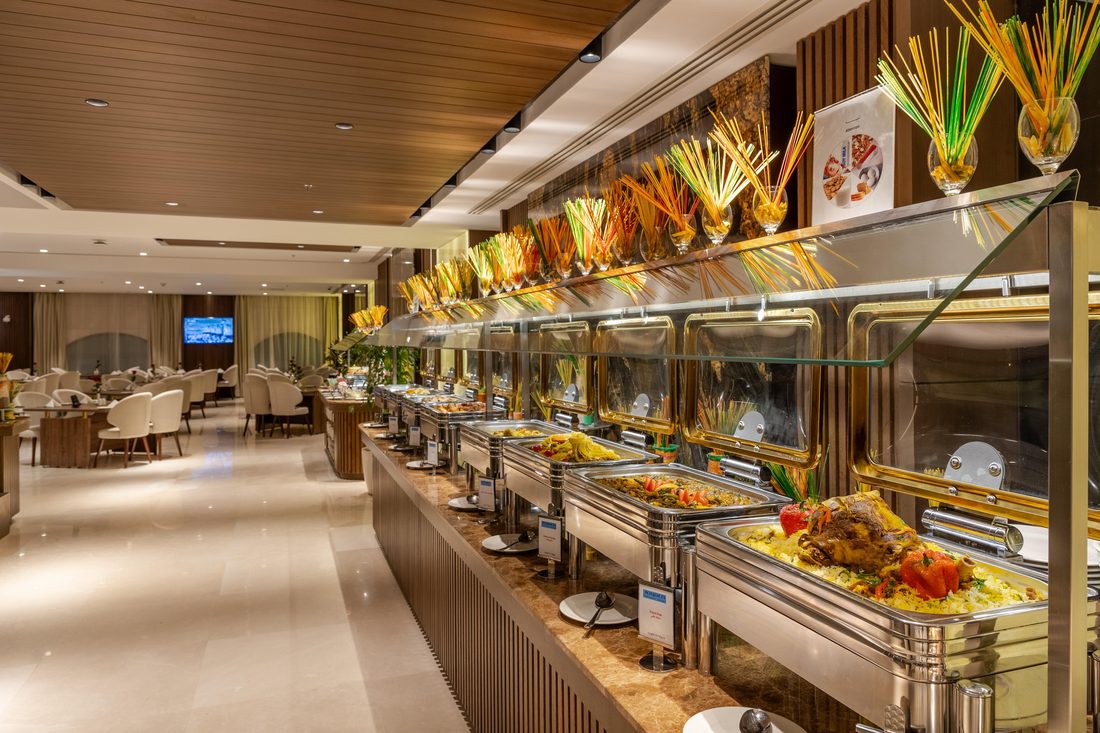
What Is a Full Size Chafing Dish? Pan Formats, Dimensions and Capacity
A chafing dish full size is the format built around a 1/1 food pan — the 530 × 325 mm Gastronorm footprint used across most hotel and catering kitchens. Chafing dish dimensions always describe the complete unit, while the food pan dimensions decide how much food it holds, so two units with identical outer measurements can deliver very different usable capacity.
| Specification | What project buyers should confirm |
|---|---|
| Overall dimensions | Length, width and height of the complete unit |
| Food pan size | 1/1, 1/2, 1/3, 4 quart or another pan format |
| Pan depth | Available food volume and serving requirements |
| Usable capacity | Approximate food volume at working line, not brim volume |
| Unit height | Buffet presentation and guest access sightline |
| Heating system | Fuel, electric, induction or another configuration |
| Material | Stainless steel grade and material thickness |
| Finish | Polishing, surface treatment and appearance |
| Packaging | Carton size, protection and loading requirements |
Confirm these four figures before comparing any two quotations
Overall Dimensions + Food Pan Dimensions + Pan Depth + Usable Capacity
A product name such as "full size" or "large" is a sales label, not a technical specification.
Pan depth is the variable buyers most often miss. Two chafing dish units can share the same footprint and the same pan format, yet the deeper model raises usable capacity by roughly half. When a project compares chafing dish sizes, pan depth is the number that most often changes the quoted price per unit. The shallower model is easier for guests to reach and suits display where food is replenished in smaller batches. Confirm depth before you fix the unit, because it changes capacity, carton volume and unit price at the same time.
Standard footprints and capacities are listed on the chafing dishes product range, and the buffet supplies sourcing guide sets out how to read a supplier specification sheet line by line.
Chafing Dish Full Size vs 4 Quart and Smaller Pans: Which Format Fits Your Service?
Full size, half size, third size and 4 quart are not simply ranked from large to small. Comparing chafing dish sizes means comparing service output per metre of counter, not comparing pan labels. Each format changes how many dishes a buffet can present, how much counter length it needs, and how often staff return to refill during peak service.
1/1 Pan
Full size main dishes
Hotels, banquets, conferences and large catering events serving rice, pasta, meat and hot vegetables.
1/2 Pan
Moderate portions
Restaurants and hotel branches that need a main dish plus a visible second option per station.
1/3 Pan
Sauces and side dishes
Flexible buffet layouts built around many small dishes rather than a few large ones.
4 Quart
Compact stations
Catering and breakfast counters where 3.8 litres per unit suits the menu and the counter length.
For a high-volume hotel breakfast buffet, a deeper 1/1 pan usually wins: one refill covers more guests, so replenishment trips per service drop and the buffet line reads as a single continuous run. For a catering operation running several small food stations, several smaller formats create more variety per metre of counter.
Matching warmers to the same menu is covered in the buffet heat lamp buying guide.
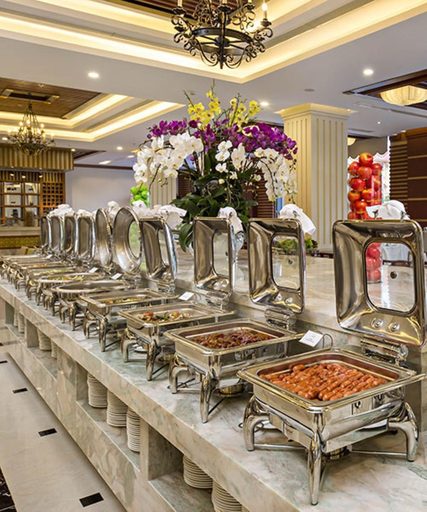
How Many Chafing Dishes Does a Hotel Buffet Need? A Sizing Checklist
Guest count alone does not determine how many chafing dishes a buffet needs, and it is the most common reason a chafing dish size order goes wrong. Menu variety, peak service window, replenishment frequency and counter length all change the answer, which is why two hotels with the same headcount can order very different quantities.
Practical starting point
Required Units = Peak Food Volume ÷ Usable Pan Capacity
Then adjust the result for the actual number of refills your service team can make inside the peak window.
Work through the checklist in order. First, list every dish on the menu and the portion weight per guest. Second, convert total weight into litres at roughly 1 litre per kilogram for hot prepared dishes. Third, match each dish to a pan format and read that pan's usable capacity at working line. Fourth, add one spare unit per four to five units in service, so a damaged lid or a dropped fuel holder does not close a station. Finally, divide total counter length by unit width to confirm the line fits the room.
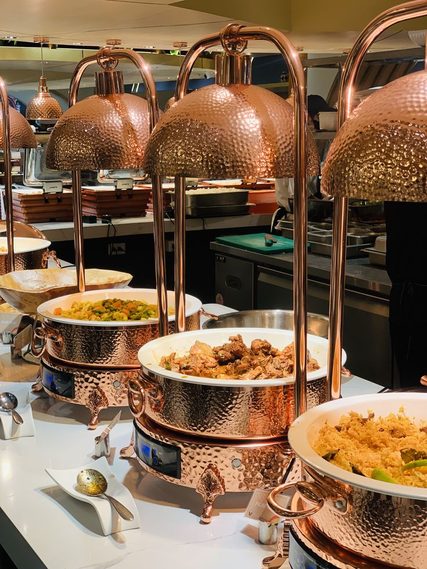
The most common sizing mistakes run in two directions, and both cost money on a chafing dish order that could have been specified more precisely. Ordering only full size pans for a menu of twelve small dishes wastes counter space and pushes the line past the room. Ordering only 4 quart units for a 400-cover hotel breakfast forces staff to refill continuously, and the visual effect on a premium buffet is worse than the saving. Size each dish, not the event.
Why Do Chafing Dish Sizes Differ Between Suppliers? Compare 7 Specifications
Two suppliers listing the same chafing dish size frequently publish different dimensions of that chafing dish size, which is why buyer-side chafing dish size verification has become a standard quotation step. The cause is rarely measurement error. Manufacturers use different pan depths, frame structures, lid designs, handle configurations, heating systems, material thicknesses and support structures, so one product name covers physically different units.
A professional B2B quotation for a given chafing dish size should carry all seven of the following:
Two suppliers quoting the same unit price can therefore be quoting different products. When chafing dish sizes are specified by name alone, price comparison is not meaningful. Requesting a technical drawing before production is the simplest way to close that gap, and it costs nothing at quotation stage.
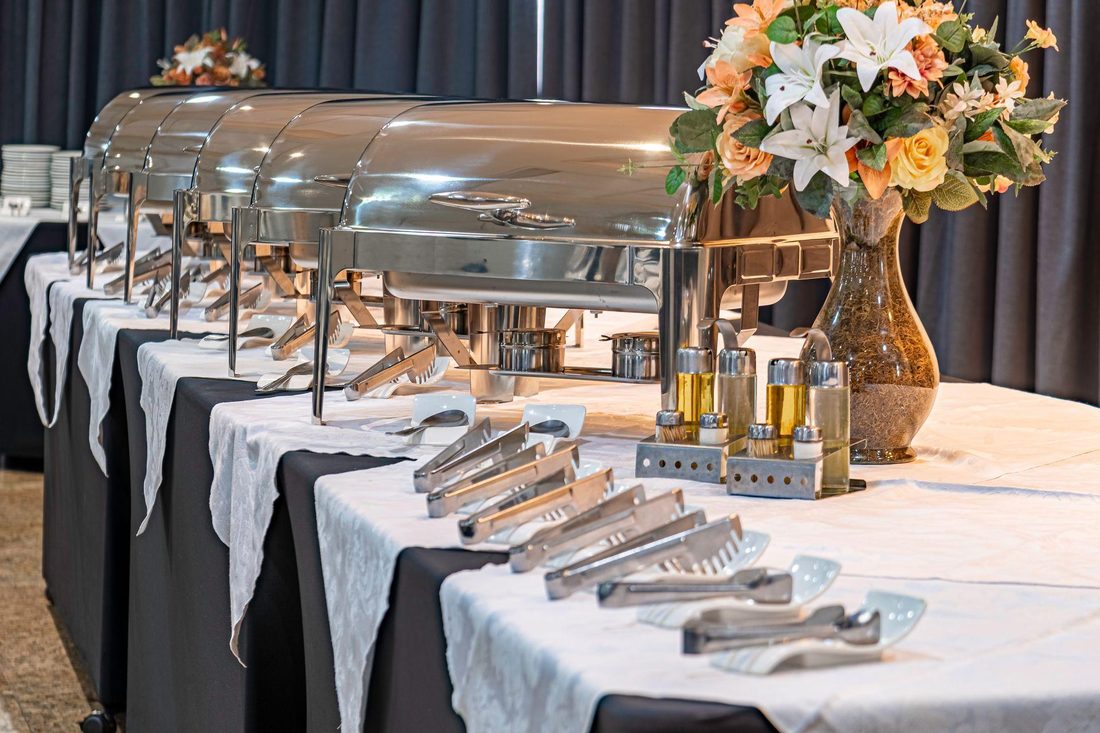
Chafing Dish Size Checklist Before a Bulk Order: MOQ, Lead Time and Loading
Before ordering chafing dishes in bulk, confirm the chafing dish size specification, quality requirements, compliance documentation, packaging and delivery schedule. Physical size affects more than buffet presentation: it changes carton dimensions, quantity per carton, gross weight, container loading efficiency, freight cost, warehouse space and protection method.
Stainless steel grade, welding and food-contact certification
Appearance matters, but construction quality decides service life in commercial use, and no chafing dish size quotation is complete without it. Confirm these before the order is released:
- Stainless steel grade and material thickness
- Welding consistency and surface polishing
- Lid construction and handle strength
- Frame stability and heating system
- Food-contact requirements
- Available FDA, LFGB, RoHS, EMC, LVD or MSDS documentation
Certification requirements must be confirmed against the actual product, materials, electrical configuration and destination market. Documentation scope is agreed per project, not assumed from a general catalogue.
Packaging, loading quantity and delivery schedule
Ask the supplier to attach the following to the quotation before a large order is confirmed:
- Carton dimensions and quantity per carton
- Gross weight and net weight
- Container loading quantity by 20 ft and 40 ft
- Protective packing method for export
- MOQ, sample lead time and production lead time
- Freight cost estimate at the agreed quantity
This matters most for importers, distributors, contractors and hospitality projects working to a fixed installation or opening date, where one missing accessory can delay an entire room handover.
Factory vs trading supplier: where the chafing dish price actually comes from
Two suppliers can quote very different prices for what looks like the same chafing dish size. A typical cost structure runs material + fabrication + welding + polishing + components + packaging + quality control + logistics, and material thickness, finish, component grade, packing standard, customization and order quantity all move the final figure.
| Factor | Direct factory | Trading supplier |
|---|---|---|
| Product development | Direct factory involvement | Depends on source factory |
| Customization | Direct technical coordination | Depends on supplier relationship |
| Quality control | Factory-controlled process | Depends on manufacturing source |
| Technical communication | Direct | May involve an intermediary |
| OEM / ODM | Direct support | Depends on factory relationship |
| Lead time | Based on production schedule | May require additional coordination |
| Cost structure | More transparent | May include additional sourcing margin |
This does not make a trading company the wrong choice. For some buyers, a trading supplier provides useful sourcing and product management services. The important point is to compare complete specification and total purchasing cost rather than the lowest unit price alone.
How PYEIN tests chafing dishes before shipment
01
Material inspection
Materials and specifications checked against the approved product requirements.
02
Dimension inspection
Key dimensions, food pan fit, component positioning and assembly accuracy checked against approved specifications.
03
Surface and welding inspection
Welding consistency, polishing quality, surface condition, deformation and visible defects reviewed.
04
Functional testing
Lid movement, component fit, frame stability and heating components checked before loading.
05
Packaging inspection
Packing reviewed for protection during handling and international transportation.
Project reference point
For customized orders, technical drawings and approved samples are used as reference throughout production.
Frequently asked questions about chafing dish sizes
What is a full size chafing dish?
A full size chafing dish is built around a 1/1-size food pan in the standard 530 × 325 mm footprint and is used for main dishes in hotels, banquets and high-volume catering. External dimensions and capacity vary by manufacturer and pan depth.
What are the standard chafing dish dimensions?
There is no single universal external dimension. Overall measurements depend on pan format, pan depth, frame design, lid structure, handles and heating system. Request the manufacturer's technical drawing for exact figures.
What is a 4 quart chafing dish used for?
A 4 quart chafing dish holds about 3.8 litres and suits smaller-volume service: side dishes, compact buffet stations, breakfast accompaniments and catering menus that need variety rather than maximum capacity.
How many chafing dishes does a hotel buffet need?
It depends on guest volume, menu variety, food quantity, pan capacity, layout and replenishment frequency. Start with peak food volume divided by usable pan capacity, then add spares and confirm the counter length fits.
Why do two suppliers list different dimensions for the same chafing dish size?
Because pan depth, frame, lid, handle, heating system and material thickness differ between manufacturers. Compare pan dimensions, pan depth, usable capacity and weight rather than relying on the size name.
What is the MOQ for PYEIN chafing dishes?
MOQ depends on the model, customization, packaging and order configuration. Provide the required size, quantity, target market and customization requirements so the correct order structure can be confirmed.
Can PYEIN provide samples, technical drawings and compliance documents?
Yes. Depending on product and project requirements, PYEIN supports sample development, technical specifications, drawings, customization and relevant compliance documentation for international markets.
Key takeaways on chafing dish sizing
- The most common full size chafing dish uses a 1/1 food pan at roughly 9.5–11 litres; a 4 quart unit holds about 3.8 litres, and 1/2 and 1/3 pans cover compact stations.
- Compare overall dimensions together with pan dimensions, pan depth and usable capacity — "full size" is a label, not a specification.
- Size every dish individually: peak food volume divided by usable pan capacity, plus spares, plus a counter-length check.
- Before a bulk order, confirm stainless steel grade, thickness, welding, polishing, certification scope, carton data, loading quantity and lead time.
- Compare complete specification and total purchasing cost rather than the lowest unit price.
Plan your chafing dish order with PYEIN
Sizing the chafing dish is the first step, and confirming the written chafing dish size specification is the second. To move forward, send us the required pan format, quantity, application and target market, and PYEIN® will support the project with product specifications, technical drawings, samples, customization and bulk quotations.
Request a quotation, request a sample, or confirm your product drawing with the PYEIN® team through the chafing dishes range or the buffet station product catalog, or work through the buffet supplies sourcing guide before you confirm a specification.