Buffet Equipment Buying Guide 2026: Complete Checklist for Hotel Buyers
- Share
- Issue Time
- Jul 15,2026
Summary
Complete 2026 guide for hotel procurement managers: buffet equipment types, material comparison (201 vs 304 SS), buying checklist, budget planning, and supplier evaluation framework.
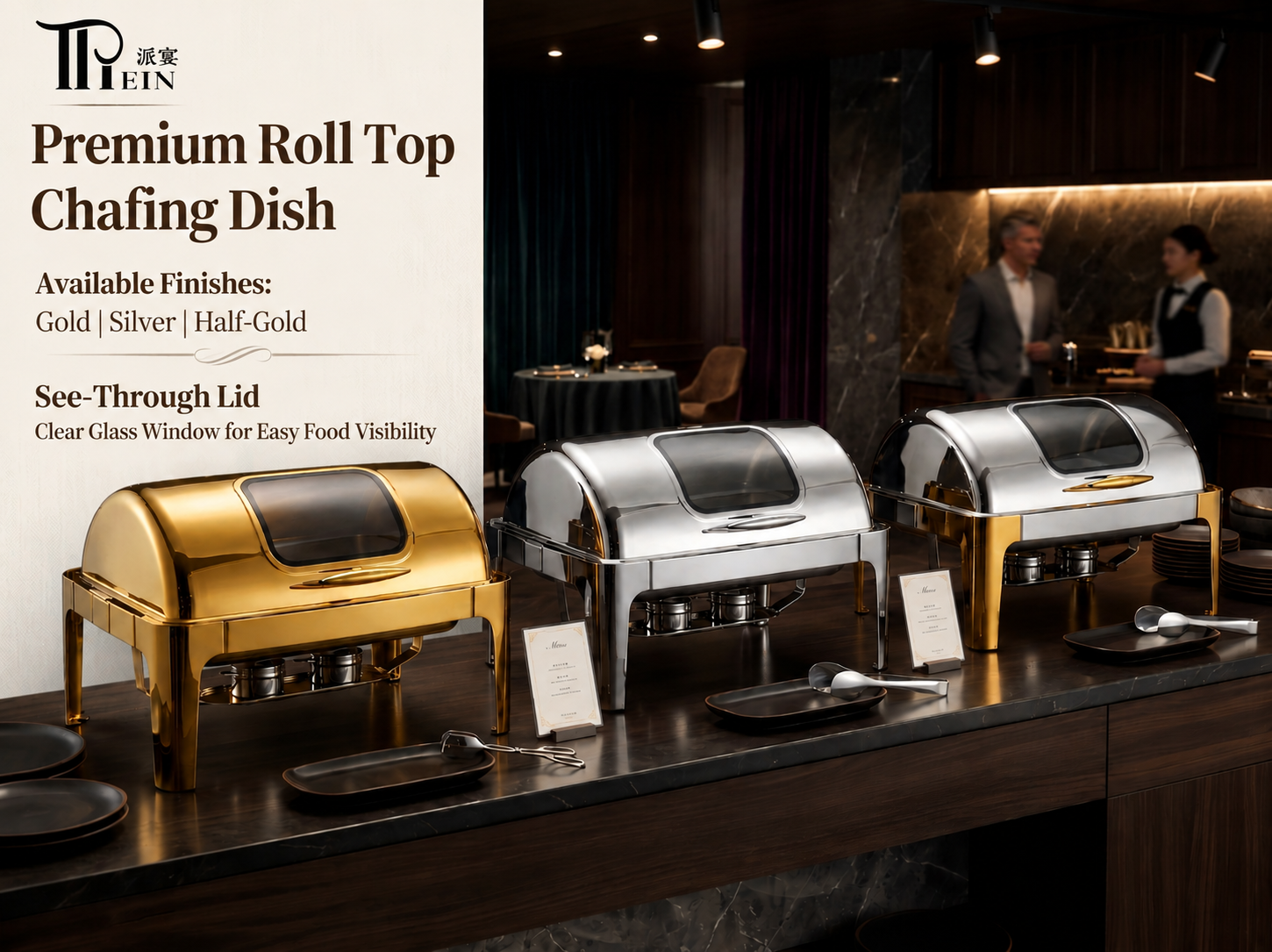
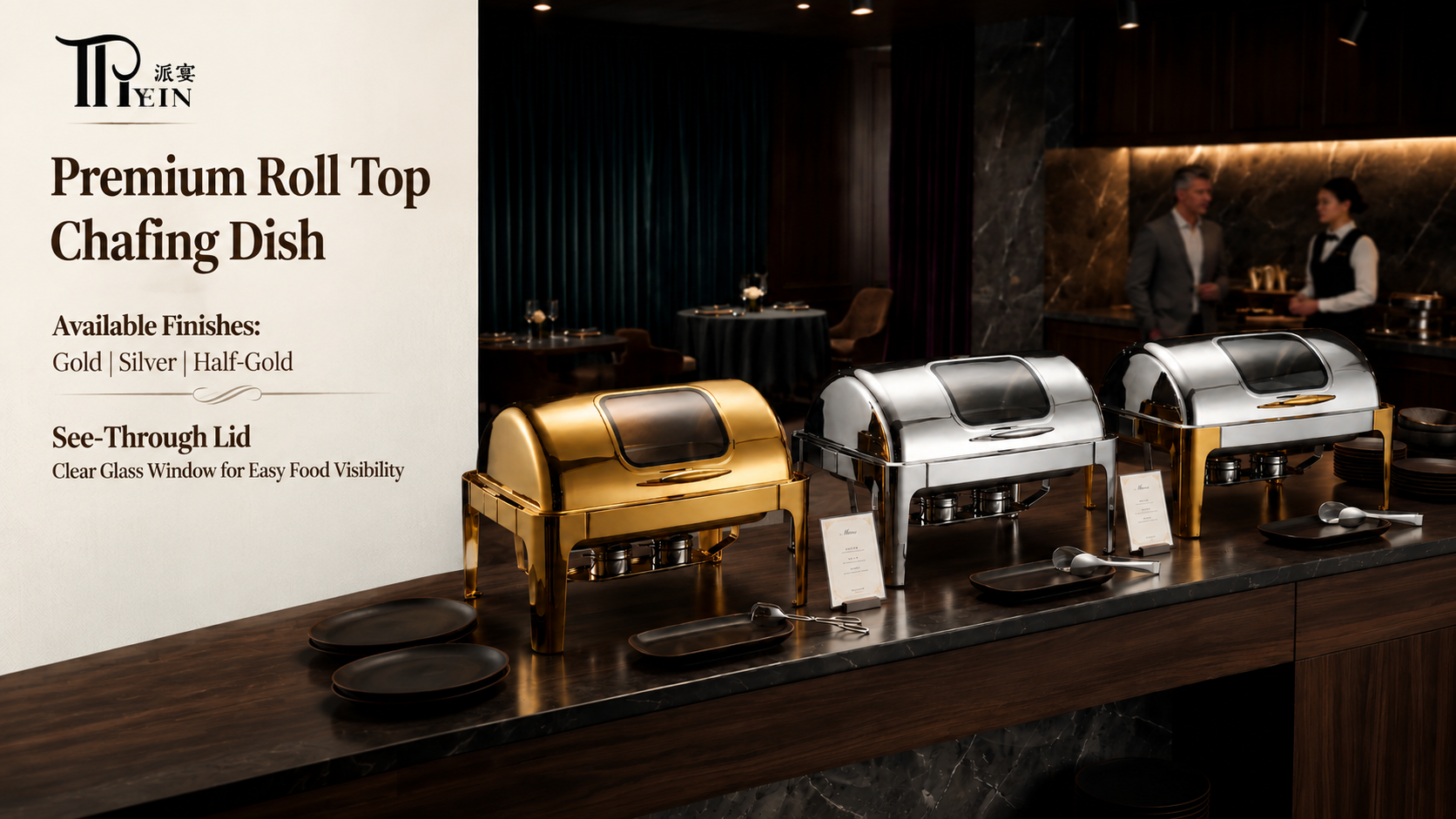
Buffet Equipment Buying Guide 2026: Complete Checklist for Hotel Buyers A well-planned buffet equipment procurement can reduce food waste by up to 30%, cut serving labor by 25%, and elevate guest satisfaction scores by 15% or more. This guide walks you through every equipment category, material grade, specification check, and supplier evaluation criterion you need before placing your next order — built from real hotel procurement experience and manufacturer-level insight. Whether you are outfitting a new 200-room property, upgrading an aging breakfast buffet line, or sourcing OEM equipment for a hospitality group, the decisions you make now about materials, heating methods, sizing, and compliance will affect your daily operations for the next 5 to 10 years. This guide gives you the framework to make those decisions with confidence. A professionally configured hotel buffet line — the result of deliberate equipment selection and layout planning. Not every hotel needs every type of buffet equipment. The right mix depends on your service model (full buffet vs. partial buffet vs. breakfast-only), daily covers, cuisine type, and available floor space. Below is the definitive category breakdown with practical selection guidance. Pro tip from hotel procurement: Most hotels overbuy chafing dishes and underinvest in display infrastructure. A well-designed buffet puts 40% of budget into structural equipment (stands, risers, sneeze guards) and 60% into functional warming equipment. The visual architecture drives perceived value more than the number of warmers. The single most important material decision you will make is the stainless steel grade. This one choice determines corrosion resistance, food safety, cleaning durability, and how your equipment looks after 500 wash cycles. Here is what you need to know — in plain terms. Commercial-grade stainless steel food containers — the industry standard for buffet equipment durability and hygiene. Know what you are buying: Both 201 and 304 SS have their place in buffet operations — the key is transparency. Always ask the supplier to specify the exact grade on the quotation and request a mill test certificate (MTC) for verification. This protects you whether you are buying budget-friendly 201 SS for a seasonal pop-up or premium 304 SS for a flagship buffet line. Use this checklist as your procurement scorecard. Every unchecked item represents a risk to your operation. We have organized it by procurement phase so you can use it from initial planning through final delivery. The purchase price of buffet equipment is typically only 55-65% of the total 5-year cost. The remaining 35-45% comes from energy consumption, replacement parts, labor for cleaning and maintenance, and premature replacement of inferior equipment. Here is how to build a realistic budget. A full commercial buffet line represents a significant capital investment — plan for the total ownership lifecycle, not just the upfront cost. Based on a typical mid-range hotel buffet setup (50-80 covers/day) over a 5-year ownership period. Choosing 201 SS lowers the purchase price; choosing 304 SS shifts budget toward purchase price but reduces replacement and maintenance costs long-term. Choosing the right supplier matters as much as choosing the right equipment. A supplier who delivers late, ships inconsistent quality, or disappears when warranty issues arise can cost you more than any price premium on quality equipment. Does the supplier own their factory, or are they a trading company? Factory-direct suppliers offer better quality control, faster customization turnaround, and lower costs. Look for in-house stamping, welding, polishing, and assembly lines — a vertically integrated facility directly affects consistency and lead times. Minimum expectations: ISO 9001 (quality management), NSF or equivalent food-safety certification, CE marking for electrical components. Beyond minimums, look for BSCI or SMETA social compliance audits — increasingly required by hospitality groups for ESG reporting. Can the supplier customize dimensions, finishes (brushed, mirror, PVD colored), branding (laser engraving, embossed logos), and packaging? Hotels with distinct brand identities need equipment that matches their aesthetic, not generic off-the-shelf products. Confirm whether the supplier maintains an in-house design team for OEM projects. Ask for references from properties similar to yours — similar star rating, similar covers per day, similar climate. A supplier who has equipped 20 luxury resorts in Southeast Asia understands humidity challenges. One who has only done domestic Chinese projects may not. Request 3 references and actually call them. What happens when a heating element fails? Who handles warranty claims — your sales contact or a separate service team? What is the response time guarantee? Do they offer video-call troubleshooting? Map the full support journey before you sign the contract. Plan for 8-12 chafing dishes: 2-3 for hot main courses (eggs, bacon/sausage, potatoes), 2-3 for ethnic/regional hot items, 1-2 for porridge/congee, 1 for steamed items, and 1-2 rotating items. Add 20% spare capacity for peak occupancy days. This assumes a full hot breakfast — continental breakfast setups need far fewer units. Both grades are widely used in hotel buffet operations — the choice depends on your budget, environment, and expected equipment lifecycle. 201 SS offers excellent value for budget-conscious properties, indoor buffets, and high-volume purchasing where cost per unit matters. With proper cleaning and maintenance, 201 SS equipment performs reliably for 3-5 years. 304 SS is the better choice for high-humidity environments, coastal resorts, and properties seeking 5-8 year lifespans with minimal maintenance. Many hotels use a mixed strategy: 304 SS for high-visibility main buffet lines and 201 SS for back-of-house and backup units. The key is knowing which grade you are buying — always request an MTC to confirm. Electric warmers offer consistent temperature control (set to 65°C and it stays there), no ongoing fuel cost, and no open flame insurance concerns. Fuel warmers work anywhere without power — essential for outdoor events and venues with limited electrical infrastructure. The best strategy: 80% electric for fixed buffet lines, 20% fuel units as backup and for off-site catering flexibility. At minimum, verify that the supplier holds CE certification for products destined for the European market, and relevant ISO standards (such as ISO 9001 for quality management). Always request the actual certificate documents — not just a claim on the website — and verify them against the issuing body's online database. Quality 304 SS chafing dishes: 5-8 years with daily use; 201 SS: 3-5 years with proper maintenance. Display stands and risers: 8-12 years. Electric warming elements: 3-5 years (replaceable). Sneeze guards (tempered glass): indefinite unless impacted. The single biggest factor affecting lifespan is cleaning protocol — using non-abrasive cleaners, avoiding steel wool, and drying thoroughly after washing can extend the useful life of any stainless steel grade significantly. Yes. OEM-capable manufacturers offer custom dimensions, branded finishes (logo engraving, embossed patterns, PVD color coating), packaging with your branding, and even completely bespoke buffet architectures. Minimum order quantities for full OEM typically start at 50-100 units per SKU. Lead times run 30-60 days. A qualified OEM partner can deliver custom buffet solutions for hotel groups — including branded chafing dishes, color-matched display stands, and hotel-specific buffet carts — in both 201 and 304 SS depending on your budget and performance requirements. Buying based on catalog photos without testing in their actual environment. The second most common mistake: under-specifying the material grade on the purchase order. The third: forgetting to plan for spare parts. Together, these three errors account for roughly 60% of premature equipment replacement in the hospitality industry. You now have the framework to make informed buffet equipment procurement decisions. Here is your three-step action plan to start today: Walk your buffet line with this checklist. Note every piece of equipment: material grade, age, condition, electrical load. Identify the 20% of equipment causing 80% of operational friction. Translate your audit findings into a detailed specification document. Include: quantities, dimensions, material grade (201 or 304 SS based on your budget and environment), certifications required, heating method, finish preference, and packaging requirements. Send your spec sheet to 3-5 qualified manufacturers. Compare not just price, but material certification, lead time, warranty terms, customization capability, and after-sales support infrastructure. Visit the factory if the order value exceeds $10,000 — it is the single best investment you can make in procurement due diligence.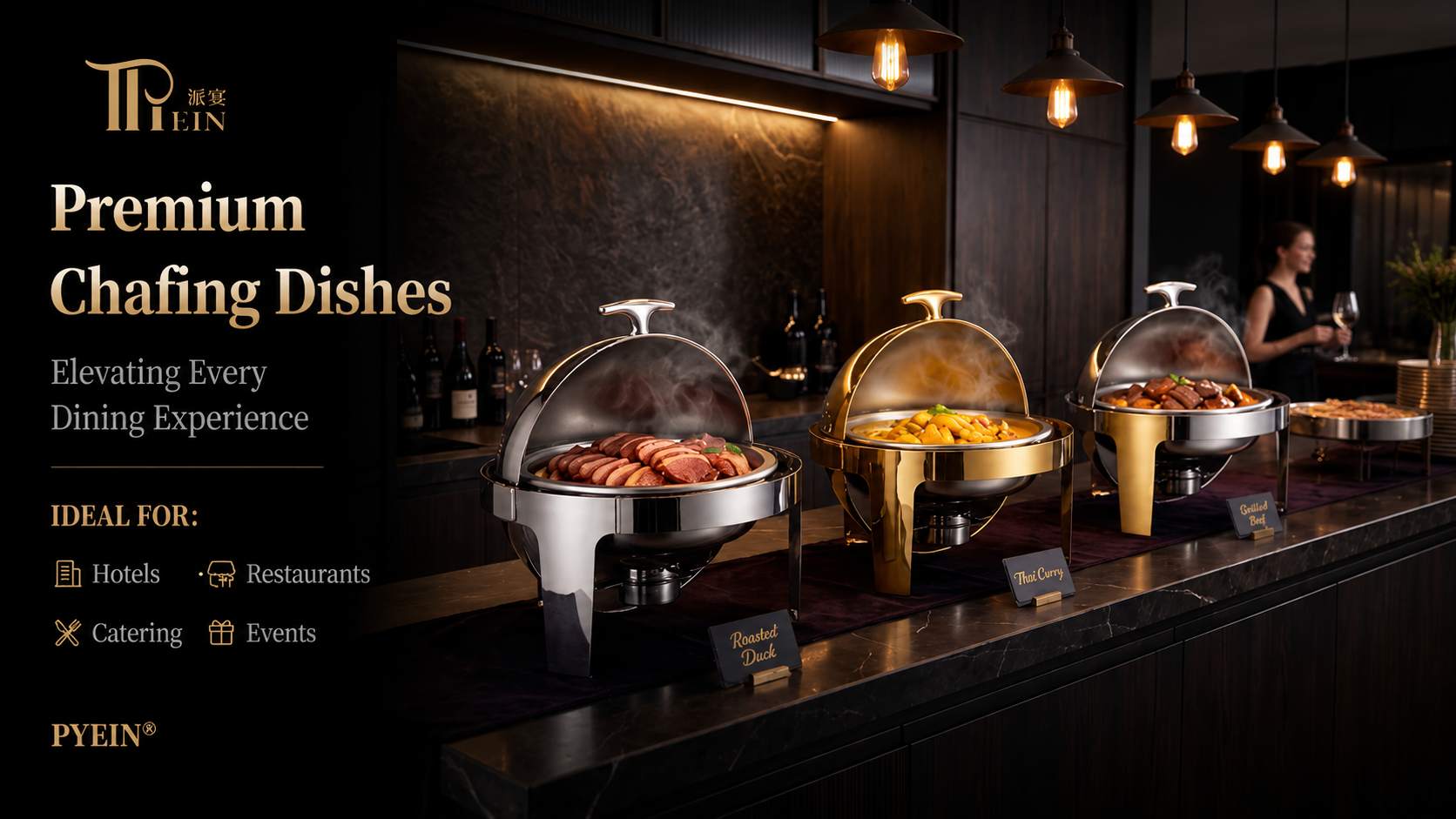
1. Buffet Equipment Categories You Actually Need
Equipment Type
Primary Function
Best For
Key Spec to Check
Typical Lifespan
Chafing Dishes / Food Warmers
Keep hot food at safe serving temperature (35°C-85°C) using fuel, electric, or induction
Main course stations, breakfast buffets, banquet service
Material grade (201/304 SS), pan depth, lid mechanism
5-8 years (SS); 3-5 years (chrome-plated)
Soup Kettles / Marmites
Hold soups, porridge, sauces at consistent temperature with ladle access
Breakfast porridge stations, soup corners, sauce displays
Capacity (5L-15L), heating type, hinged lid
5-7 years
Buffet Display Stands / Risers
Create visual hierarchy, tiered presentation, and themed buffet architecture
Cold platters, dessert tables, seafood displays
Frame material, weight capacity per tier, modularity
8-12 years
Beverage Dispensers
Serve juice, iced tea, infused water in self-service format
Breakfast juice stations, poolside beverage corners
Capacity (3L-20L), drip tray design, insulation
3-5 years (plastic); 5-8 years (glass/SS)
Plate & Bowl Dispensers
Spring-loaded or gravity-fed stack dispensing for hygiene and space efficiency
Buffet line start points, high-volume self-service
Plate diameter range, spring tension adjustability, heated option
6-10 years
Induction / Electric Warming Stations
Precise temperature-controlled hot holding without open flame
Indoor buffets with power access, fine-dining buffet
Wattage, temperature range (30-90°C), pan compatibility
5-7 years
Mobile Buffet Stations / Carts
Portable complete buffet units with built-in heating, shelving, and sneeze guards
Banquet halls, outdoor catering, pop-up breakfast stations
Wheel quality, overall dimensions, power cord management
5-8 years
2. Material Matters: Stainless Steel Grades Explained
Property
201 Stainless Steel
304 Stainless Steel
316 Stainless Steel
Nickel Content
1-2%
8-10.5%
10-14%
Corrosion Resistance
Good for standard indoor use; may show spotting in high-humidity or coastal environments over time
Excellent — handles daily wash-down, food acids, ambient humidity
Superior — resists salt spray, chlorine exposure, marine environments
Food Safety
Acceptable for standard buffet use; suitable for most food contact applications
NSF/ANSI 51 certified, food-grade standard worldwide
Highest food-grade rating, pharmaceutical-grade
Cost Factor (vs 304)
40-50% cheaper
Baseline (100%)
50-70% more expensive
Appearance After 1 Year
May show minor spotting with daily use; regular cleaning maintains acceptable appearance
Retains luster with regular cleaning
Like-new appearance maintained long-term
Best Use Case
Budget-conscious hotels, indoor buffets, cost-effective volume purchasing
Hotel buffets, restaurants, catering — the gold standard
Coastal resorts, cruise ships, outdoor beach buffets
3. The Complete 2026 Buying Checklist
Phase A: Pre-Purchase Assessment
Phase B: Specification & Compliance
Phase C: Supplier & Logistics
4. Budget Planning: Total Cost of Ownership, Not Just Purchase Price
5. How to Evaluate Buffet Equipment Suppliers
Manufacturing Capability
Certifications & Compliance
Customization & OEM Capability
Client Portfolio & References
After-Sales Support
6. Frequently Asked Questions
Q: How many chafing dishes do I need for a 100-guest breakfast buffet?
Q: Should I choose 201 or 304 stainless steel for my buffet equipment?
Q: Electric warmers vs. fuel (chafing fuel) warmers — which is better?
Q: What certifications should I look for when importing buffet equipment?
Q: How long should buffet equipment last?
Q: Can I get custom-designed buffet equipment for my hotel brand?
Q: What is the most common mistake hotels make when buying buffet equipment?
Summary: Your Action Plan
Audit Your Current Setup
Build Your Spec Sheet
Request Competitive Quotes